
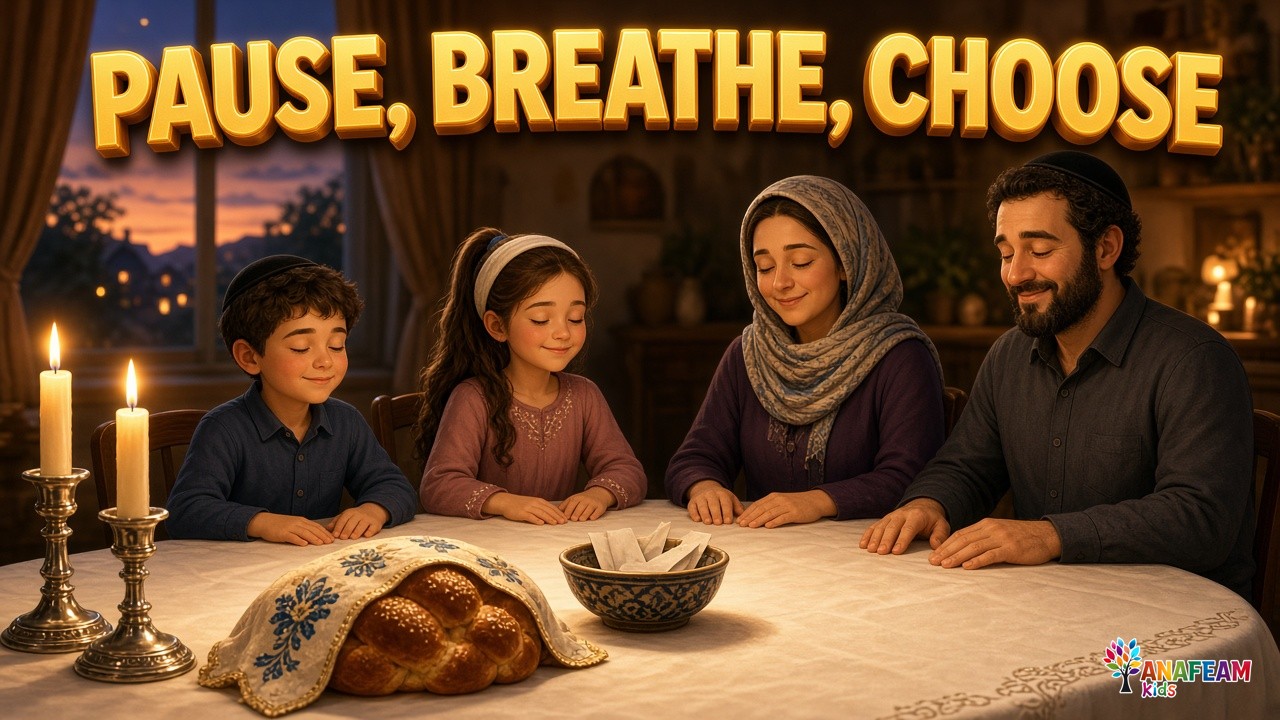
Patience: Pause, Breathe, Choose
A Shabbat table game about the few seconds between "something went wrong" and "what I do next." With Hillel's famous story of patience.
Best for ages 6 to 8, with easy changes for younger and older siblings
What's in this kit
- A short note for parents
- Three questions for the Shabbat table, plus a deeper one for older kids
- A 10 to 15 minute table game: Pause, Breathe, Choose cards
- Printable cards, 4 pages, US Letter
- One mission to try during the week
- Audio story: The Missing Game Piece (10 min)
- A related episode: Hillel Never Gets Angry
For parents
Patience is hard for kids, and honestly, for grown-ups too. This week is about the few seconds between "something went wrong" and "what I do next."
The Talmud tells about Hillel, a great sage who lived about 2,000 years ago. Two men made a bet: whoever could make Hillel angry would win 400 coins. One of them came on a Friday afternoon, while Hillel was washing his hair to get ready for Shabbat, and called him out again and again with silly questions. Hillel came out every time and answered each question kindly.
Your kids don't need to be Hillel. The goal is smaller: notice the hot feeling, pause, take one slow breath, and choose what to do. The cards below let kids practice that on made-up problems, which is a lot easier than practicing in the middle of a real one.
Before Shabbat
- Print the PDF and cut the cards.
- Watch "Hillel Never Gets Angry" together (free).
- Listen to the audio story "The Missing Game Piece" in the car or at bedtime (free).
At the Shabbat table
- Ask the three questions. Add the deeper one if you have older kids.
- Play Pause, Breathe, Choose with the cards you cut before Shabbat.
- Agree on your pause signal for the week.
Nothing at the table needs writing, cutting, a screen or audio. Customs differ, so do what fits your home.
Talk about it
- The man kept calling "Who here is Hillel?" just to bother him. What do you think Hillel was thinking each time he came to the door?
- What makes you feel impatient really fast? What does your body do when it happens?
- Think of a time someone was patient with you. How did it feel?
For older kids: Hillel didn't just stay quiet. He answered every silly question kindly and seriously. Is there a difference between holding your anger in and actually being patient?
The game: Pause, Breathe, Choose cards
You'll need
- The printed cards (pages 2 and 3), cut apart
- A bowl or basket to hold them
Get ready (before Shabbat)
- Print the PDF on any home printer. Black and white is fine.
- Cut the cards apart along the dashed lines.
- If you want, fill in the two blank cards with situations from your own home.
- Put the cards in a bowl and set it on the table.
How to play (at the table)
- Someone picks a card and reads it out loud. A parent can read for kids who aren't reading yet.
- Pause: everyone puts both hands flat on the table.
- Breathe: everyone takes one slow breath together. Smell the soup (in through the nose), then cool the soup (out through the mouth).
- Choose: go around the table. Each person says one thing the kid on the card could do instead of exploding.
- The reader picks the choice they like best, and the card goes to the next person.
Younger siblings. A parent reads the card. The little one leads the breath and shows their best calm face. That's their whole job, and they'll love it.
Older siblings. After each choice, ask what would probably happen next. Then let them make up a harder situation out loud for the grown-ups.
Print the cards
4 pages, US Letter. Prints fine in black and white on any home printer.
- Shabbat table page: questions and this week's mission
- 10 situation cards and 2 blank cards to fill in before Shabbat
- Weekday pause tracker
This week's mission: One patient choice this week
Pick one situation that happens a lot in your home, like waiting for a turn, a sibling who takes forever, or a lost shoe. Agree on a quiet pause signal, like a hand on your heart. When someone uses it this week, notice it with a smile. At next Shabbat's table, everyone shares one time they used it.
Watch and listen during the week

 Free to watch5:14
Hillel Never Gets Angry
A man bets he can make Hillel lose his temper on a Friday afternoon. Hillel stays patient every time. Free to watch, about 5 minutes. Watch it during the week, before Shabbat.
Sources
- The story of Hillel and the bet: Talmud, Shabbat 30b to 31a.